In a commercial kitchen, maintaining cleanliness and hygiene is crucial for food safety, efficiency, and overall operations. To achieve this, different types of cleaners are used, each designed for specific tasks and surfaces.
The 4 main types of cleaners used in commercial kitchens are…
Detergents
- Purpose – Detergents are used primarily for removing grease, oils, dirt, and food residue from surfaces and kitchen equipment.
- How They Work – Detergents work by breaking down the bonds between dirt and surfaces, allowing grease and grime to be washed away with water.
- Common Uses – They are used for washing dishes, pots, pans, and other cooking utensils, as well as cleaning work surfaces like countertops and tables.
- Examples – Dishwashing liquid, all-purpose kitchen cleaners, and concentrated dish detergents for industrial dishwashers.
Degreasers
- Purpose – Degreasers are specifically designed to break down and remove grease and heavy oils, which are commonly found in commercial kitchens.
- How They Work – These cleaners typically contain powerful chemical agents that dissolve grease and oils, making them easier to wipe away or rinse off.
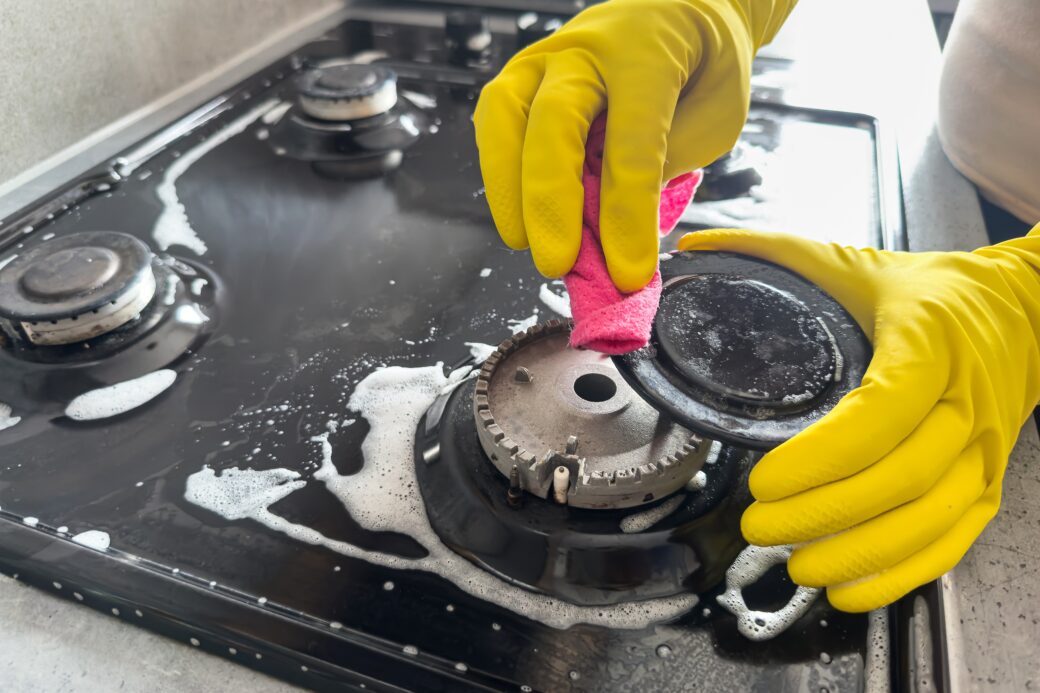
- Common Uses – They are used on grills, fryers, ovens, stoves, exhaust hoods, and vents—areas that accumulate grease and carbon buildup.
- Examples – Heavy-duty degreasers, oven cleaners, and kitchen surface degreasers.
Sanitizers
- Purpose – Sanitizers are used to kill germs, bacteria, and viruses on surfaces after they have been cleaned with detergents or degreasers. They help reduce the microbial load to safe levels.
- How They Work – Sanitizers typically contain antimicrobial agents that kill or neutralize pathogens. They are effective against bacteria, viruses, and fungi, and usually work by leaving a thin antimicrobial film on the surface.
- Common Uses – They are applied to food prep areas, cutting boards, countertops, and utensils. Sanitizing is also crucial in dishwashing to ensure that any harmful bacteria or germs are eliminated.
- Examples – Quaternary ammonium compounds (quats), chlorine bleach solutions, and iodine-based sanitizers.
Acid Cleaners
- Purpose – Acid cleaners are used to remove mineral deposits, lime scale, and rust, which can build up from hard water and other environmental factors in a commercial kitchen.
- How They Work – Acidic compounds in these cleaners react with the mineral deposits, breaking them down so they can be wiped or scrubbed away.
- Common Uses – They are often used in dishwashers, coffee machines, ice machines, and kettles to remove mineral buildup and scale.
- Examples – Descalers, citric acid-based cleaners, and phosphoric acid solutions.
Summary of the 4 Types of Cleaners
- Detergents – Used for general cleaning, removing dirt, oils, and food residue.
- Degreasers – Used to break down heavy grease and oil buildup on surfaces and equipment.
- Sanitizers – Used to kill bacteria, viruses, and pathogens after cleaning to ensure surfaces are hygienic.
- Acid Cleaners – Used to remove mineral deposits, lime scale, and rust, typically in machines or appliances.
Each of these cleaners serves a distinct purpose in maintaining cleanliness, hygiene, and food safety in a busy commercial kitchen. Proper use and regular cleaning with the right products are essential to meet health and safety regulations and provide a safe environment for food preparation.




Leave a Comment