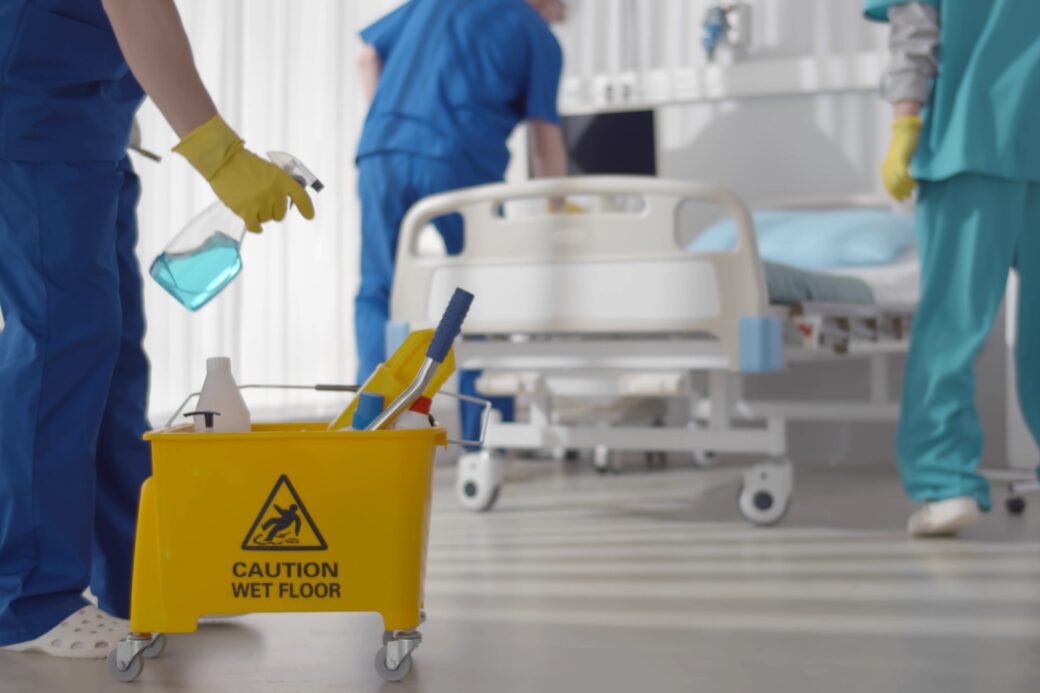
Terminal cleaning in a hospital is a thorough and detailed cleaning process used to disinfect and sanitize patient rooms or areas after a patient has been discharged or transferred. This is especially critical if the patient had a contagious disease or infection, as the goal is to eliminate all pathogens and create a safe environment for the next patient. Terminal cleaning involves more than routine cleaning and typically requires specific protocols and disinfection techniques.
Here’s a step-by-step guide on how to properly conduct terminal cleaning in a hospital setting…
Preparation
- Gather Cleaning Supplies – Before starting, ensure you have all necessary cleaning equipment and supplies, such as:
- Hospital-grade disinfectants (e.g., bleach, quaternary ammonium compounds)
- Clean mop and bucket
- Microfiber cloths or disposable wipes
- Disposable gloves and personal protective equipment (PPE)
- Trash bags
- A vacuum with a HEPA filter (for carpets)
- Hand sanitizer or handwashing station
- Put on Personal Protective Equipment (PPE) – Wear gloves, gown, face shield or goggles, and a mask to prevent contamination. In some high-risk areas, you may also need an N95 respirator.
Remove Contaminated Items
- Clear the Room – Remove all patient belongings, equipment, and any medical waste that could be contaminated (e.g., linens, used medical supplies, trash).
- Dispose of contaminated items (e.g., soiled linen, used gloves, syringes) in the appropriate biohazard waste containers.
- Remove non-disposable items such as equipment or furniture that might need disinfection or cleaning.
- Remove Linens – Remove all dirty bed linens and blankets, and place them directly into laundry bags for proper laundering.
Clean High-Touch Surfaces
- Start High – Begin cleaning from the top of the room and work your way down to avoid re-contaminating areas you’ve already cleaned.
- Light switches, door handles, bedrails, over-bed tables, call buttons, and furniture should all be wiped down first.
- Use a disinfectant wipe or a clean cloth soaked in a hospital-grade disinfectant.
- Disinfect Electronics – Use an approved disinfectant that is safe for electronics to wipe down telephones, TV remotes, computers, or monitors.
- Be sure to follow manufacturer instructions for each device to avoid damage.
Clean and Disinfect Floors
- Sweep and Vacuum – Sweep or vacuum the floor to remove dust, dirt, and debris. If the room has carpeting, use a vacuum cleaner with a HEPA filter to capture airborne contaminants and pathogens.
- Mop the Floor – Mop the floor with a hospital-grade disinfectant solution, ensuring to follow the manufacturer’s guidelines for dilution and contact time.
- Make sure to focus on areas around the bed, bathroom, and high-touch spots like doorways.
- Ensure that the mop head is changed frequently to prevent spreading contamination.
Clean the Bed and Bed Area
- Disinfect the Bed Frame – Clean the bed frame, including the headboard, footboard, and rails with a disinfectant.
- Disinfect the Mattress – If necessary, clean the mattress with an approved disinfectant. In cases of infectious patients, a mattress cover may need to be replaced or disinfected thoroughly.
- Some hospitals use mattress protectors that can be wiped down or disinfected easily.
- Change the Linens – Place fresh linens on the bed. Ensure that the bed is fully made and tidy for the next patient.
Disinfect Bathroom
- Clean the Toilet – Thoroughly disinfect the toilet, including the seat, lid, flush handle, and base, using a hospital-grade disinfectant.
- Clean the Sink and Countertops – Wipe down the sink, faucet, and countertop areas, paying special attention to high-touch points like faucet handles and soap dispensers.
- Disinfect the Shower (if applicable) – Clean and disinfect any shower or tub areas, including showerheads, faucets, and the floor. Use a disinfectant that is effective against Clostridium difficile (C. diff) if the patient had such an infection.
- Replace Towels and Soap – Replace any used towels, washcloths, and personal items. Ensure that soap dispensers are full, and sanitary paper products (toilet paper, hand towels) are stocked.
Clean Walls and Windows
- Walls – Wipe down walls where necessary, especially if they show visible marks or splashes. Some areas may not need to be cleaned unless visibly soiled, but it’s important to disinfect frequently touched spots (e.g., around light switches).
- Windows – Clean the windows, both inside and outside (if possible), to remove fingerprints, dust, or marks.
Final Disinfection and Airing Out
- Disinfect Remaining Surfaces – Ensure that any remaining surfaces are disinfected, including vents, window blinds, and any other equipment in the room.
- Airing the Room – If possible, open windows or use an air purifier to improve ventilation and help remove any lingering odors from cleaning products or the previous patient’s stay.
- Ventilate – Make sure the room is aired out for adequate ventilation before the next patient occupies it.
Dispose of Cleaning Materials
- Dispose of Cleaning Materials Properly – Once you’ve finished, dispose of all used cleaning materials (cloths, gloves, mop heads) in appropriate trash bags or biohazard bins.
- Sanitize cleaning tools – Mop heads, cleaning cloths, and other reusable cleaning tools should be disinfected and sanitized to prevent cross-contamination in the future.
Final Inspection
- Conduct a Visual Inspection – Before closing the room, do a final walkthrough to ensure that all areas are cleaned and disinfected, and that nothing has been missed. If using a checklist for terminal cleaning, go over it one last time to confirm that all steps were followed.
- Record Cleaning – Some hospitals require a record of the terminal cleaning process, including the date, time, and cleaning staff involved. This may be noted in the patient’s medical records or the cleaning logs.
Key Considerations
- Hospital-grade Disinfectants – Always use hospital-approved disinfectants, especially in areas with high infection risk (e.g., ICUs, surgical rooms). Be sure to follow manufacturer instructions for contact time and dilution.
- PPE – Wear appropriate PPE, including gloves, masks, and gowns, to protect yourself from exposure to contaminants.
- Check Infection Protocols – Follow any additional protocols for patients with specific infections, such as C. difficile, norovirus, or MRSA. Some rooms may require terminal cleaning with additional disinfectants or special procedures.
- Cleaning Frequency – Terminal cleaning is performed after every patient discharge, especially in high-risk areas or if the patient had an infection.
Terminal cleaning is a vital part of infection control in hospitals. It ensures that patient rooms are thoroughly cleaned, disinfected, and safe for the next occupant. By following detailed protocols, including using the right disinfectants, cleaning all surfaces, and disposing of waste properly, you can significantly reduce the risk of hospital-acquired infections and maintain a safe, sterile environment for all patients.




Leave a Comment