Hospitals take floor disinfection very seriously to prevent the spread of infections and maintain a sterile environment. The process is thorough and often more intensive than standard cleaning methods used in homes or offices.
Here’s a breakdown of how hospitals typically disinfect their floors…
Daily Cleaning with Hospital-Grade Disinfectants
- Routine Cleaning – Hospital floors are cleaned daily using hospital-grade disinfectants to kill bacteria, viruses, and other pathogens. These disinfectants are specifically formulated to be effective against a wide range of harmful microorganisms, including MRSA, C. diff, and norovirus.
- Disinfectant Solutions – Common disinfectants used include bleach-based products, quaternary ammonium compounds (quats), and hydrogen peroxide solutions. These are mixed according to the manufacturer’s instructions to ensure effectiveness.
High-Touch Areas and Heavy Traffic Zones
- Focus on High-Traffic Areas – High-traffic areas like hallways, entrances, patient rooms, and restrooms are cleaned more frequently to reduce the buildup of dirt and germs. These areas are often considered high-risk because of the increased likelihood of contamination.
- Frequent Disinfection of High-Touch Surfaces – In addition to floors, surfaces such as doorknobs, railings, and light switches are regularly disinfected, as they are common places for germs to spread.
Floor Cleaning Equipment
- Automatic Scrubbers – Hospitals often use automatic floor scrubbers for large surface areas. These machines combine detergent, water, and a scrubbing action to clean and disinfect the floors in one pass. The scrubbers also vacuum up excess water to prevent moisture buildup, which can lead to bacterial growth.
- Mopping with Microfiber – In some areas, microfiber mops are used to apply disinfectants. Microfiber is effective at trapping dirt and germs while leaving fewer residues behind than traditional cotton mops.
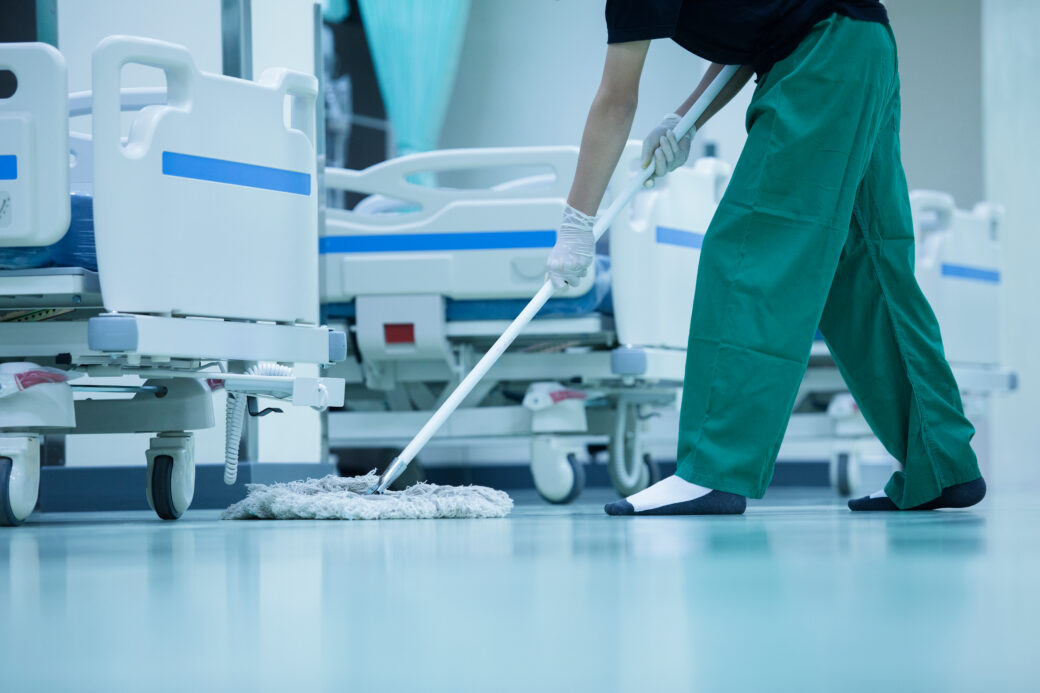
- Wet vs. Dry Mopping – For disinfecting, the floors are typically wet mopped with a disinfectant solution, especially in patient rooms or critical care areas, to ensure maximum coverage and pathogen elimination.
Deep Cleaning and Terminal Cleaning
- Terminal Cleaning – After a patient leaves a room or following a discharge, rooms undergo a more thorough cleaning called terminal cleaning. This involves not only disinfecting the floors but also deep cleaning all surfaces, walls, and high-touch items with stronger disinfectants.
- Viral Outbreaks or Special Precautions – During outbreaks of highly contagious diseases (like flu or COVID-19), hospitals may implement more frequent disinfection procedures or use stronger, hospital-specific disinfectants in affected areas.
Drying and Residue Removal
- After mopping or using an automatic scrubber, the floor is often left to dry to ensure any residual disinfectant is absorbed. Excess moisture is carefully controlled to prevent damage to the floor or promote mold growth.
- Buffing and Polishing – Some hospitals may use floor buffers to polish and maintain the appearance of hard floors, particularly in lobbies or high-visibility areas.
Staff Training and Compliance
- Proper Technique – Hospital cleaning staff are trained in infection control protocols and proper cleaning techniques. This ensures that all areas are disinfected correctly, and no harmful pathogens are left behind.
- Compliance and Documentation – Hospitals follow strict guidelines for cleanliness and disinfection, including those set by organizations like the Centers for Disease Control and Prevention (CDC), OSHA, and The Joint Commission. Cleaning procedures are documented and regularly audited for compliance.
Use of UV-C Light (Emerging Technology)
- In some hospitals, UV-C light devices are used for additional disinfection. These devices use ultraviolet light to kill bacteria and viruses on floors and surfaces after regular cleaning, providing an added layer of protection.
Why It’s Important
Hospital floors can harbor dangerous bacteria, viruses, and fungi, so rigorous cleaning protocols are crucial in preventing healthcare-associated infections (HAIs). The goal is to create a safe, sterile environment for patients and staff and minimize the risk of cross-contamination.
In short, hospital floor disinfection is a multi-step process involving the use of powerful disinfectants, specialized cleaning equipment, and rigorous protocols to ensure every surface is thoroughly sanitized and free from harmful pathogens.




Leave a Comment