The most commonly used hospital disinfectants are those that can effectively kill a wide range of pathogens, including bacteria, viruses, fungi, and even resistant spores. These disinfectants must meet strict standards set by health organizations like the EPA (Environmental Protection Agency), CDC (Centers for Disease Control and Prevention), and OSHA (Occupational Safety and Health Administration) for safety and efficacy.
Here are the most commonly used hospital disinfectants
Quaternary Ammonium Compounds (Quats)
- What They Are – Quaternary ammonium compounds, often referred to as “quats”, are a group of disinfectants that are widely used in hospitals due to their broad-spectrum antimicrobial activity.
- How They Work – Quats work by disrupting the cell membrane of bacteria and viruses, causing them to break down. They are effective against a wide range of pathogens, including MRSA (Methicillin-resistant Staphylococcus aureus), E. coli, norovirus, and other healthcare-associated infections (HAIs).
- Advantages
- Fast-acting – Effective in a short time.
- Safe for most surfaces – Can be used on floors, countertops, and equipment.
- Low toxicity compared to other disinfectants.
- Examples
- Clorox Healthcare® Hydrogen Peroxide Cleaner Disinfectant
- Sani-Cloth® products
- Purell® Healthcare Surface Disinfectant
Chlorine Bleach (Sodium Hypochlorite)
- What It Is – Chlorine bleach is one of the most powerful disinfectants available, and it’s commonly used in hospitals to sanitize heavily soiled areas and kill a wide range of pathogens, including C. difficile spores, norovirus, HIV, and hepatitis viruses.
- How It Works – Chlorine bleach works by oxidizing the cell components of bacteria, viruses, and fungi, effectively killing them.
- Advantages
- Highly effective against spores and hard-to-kill pathogens.
- Broad-spectrum disinfectant.
- Disadvantages
- Can be harsh on surfaces, causing corrosion or discoloration.
- Strong odor and potential irritation to skin and respiratory systems.
- Examples
- Clorox® Healthcare Bleach Germicidal Wipes
- Purell® Healthcare Surface Disinfectant with Bleach
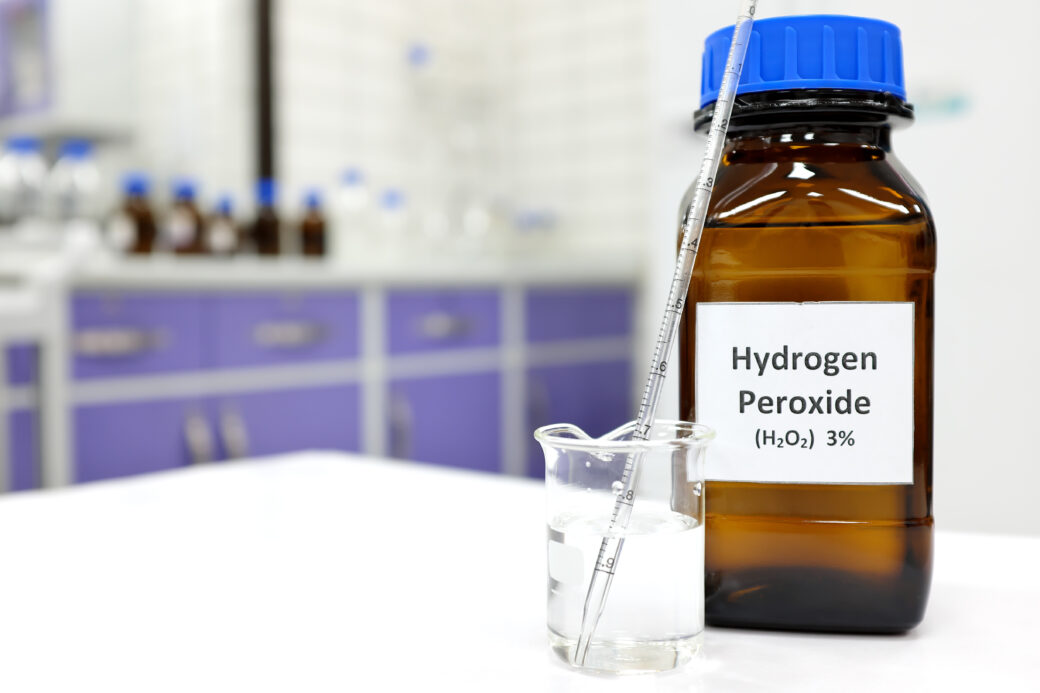
Hydrogen Peroxide
- What It Is – Hydrogen peroxide is a powerful disinfectant that is increasingly being used in hospitals due to its environmentally friendly properties and effectiveness against a broad range of pathogens.
- How It Works – Hydrogen peroxide works by releasing oxygen molecules that break down the cell walls of pathogens, leading to their destruction.
- Advantages
- Non-toxic and non-irritating compared to chlorine bleach.
- Can break down into harmless water and oxygen after use.
- Effective against a variety of bacteria, viruses, fungi, and spores.
- Examples
- Virex® II 256 (contains hydrogen peroxide and other cleaning agents).
- Clorox® Healthcare Hydrogen Peroxide Cleaner Disinfectant.
- Ecolab® Peroxide Multi Surface Cleaner and Disinfectant.
Alcohol (Isopropyl Alcohol & Ethanol)
- What It Is – Alcohol-based disinfectants like isopropyl alcohol (IPA) or ethanol are commonly used in hospitals for disinfecting small equipment, surfaces, and medical devices.
- How It Works: Alcohols work by denaturing proteins in microorganisms and disrupting their cell membranes, effectively killing them.
- Advantages
- Quick-drying and easy to apply.
- Non-corrosive and ideal for sensitive equipment.
- Effective against bacteria and viruses, including norovirus and influenza.
- Disadvantages
- Not effective against spores (e.g., C. difficile).
- Flammable and may cause irritation to the skin.
- Examples
- Purell® Healthcare Surface Disinfectant (alcohol-based).
- Steris® 70% Isopropyl Alcohol.
Peracetic Acid
- What It Is – Peracetic acid is a powerful oxidizing agent used as a disinfectant in healthcare settings, especially for cleaning surgical instruments and medical equipment.
- How It Works – It works by breaking down the cell structure of bacteria, viruses, and fungi through its oxidizing action.
- Advantages
- Effective against bacteria, viruses, fungi, and spores.
- Fast-acting and can be used in a variety of healthcare environments.
- Often used in combination with other agents to improve efficacy.
- Examples
- Steris® Peracetic Acid Disinfectant (often used in sterilization equipment).
Phenolic Compounds
- What They Are – Phenolic disinfectants are used in hospitals for disinfecting floors, surfaces, and equipment. They are derived from phenol, which was one of the first disinfectants used in healthcare.
- How They Work – Phenolic compounds work by disrupting the cell membrane of pathogens and interfering with their enzymes and metabolic functions.
- Advantages
- Effective against bacteria and viruses, including MRSA, HIV, and herpes simplex.
- They can penetrate biofilms, which makes them effective for cleaning heavily contaminated surfaces.
- Disadvantages
- Can be harsh on certain surfaces.
- Often have a strong odor.
- Examples
- Lysol® IC Quaternary Disinfectant Cleaner (contains phenolic compounds).
- Pine-Sol® Disinfectant (contains phenolic ingredients).
Most Commonly Used Hospital Disinfectants
- Quaternary Ammonium Compounds (Quats) – Versatile, fast-acting, and widely used in many hospital settings.
- Chlorine Bleach (Sodium Hypochlorite) – Strong disinfectant, particularly for areas contaminated with C. difficile or other hard-to-kill pathogens.
- Hydrogen Peroxide – A safer, environmentally friendly disinfectant that’s effective against a broad range of pathogens.
- Alcohol (Isopropyl Alcohol & Ethanol) – Commonly used for sanitizing medical equipment and surfaces quickly.
- Peracetic Acid – Powerful oxidizing agent, especially used for sterilizing medical instruments.
- Phenolic Compounds – Effective against a range of pathogens but typically used in specific applications.
Conclusion
The most commonly used hospital disinfectants are quaternary ammonium compounds (quats) and chlorine bleach, due to their broad-spectrum effectiveness and quick action against a wide variety of pathogens. Hospitals may use a combination of these disinfectants based on the specific cleaning needs and the type of pathogen they are targeting.



Leave a Comment