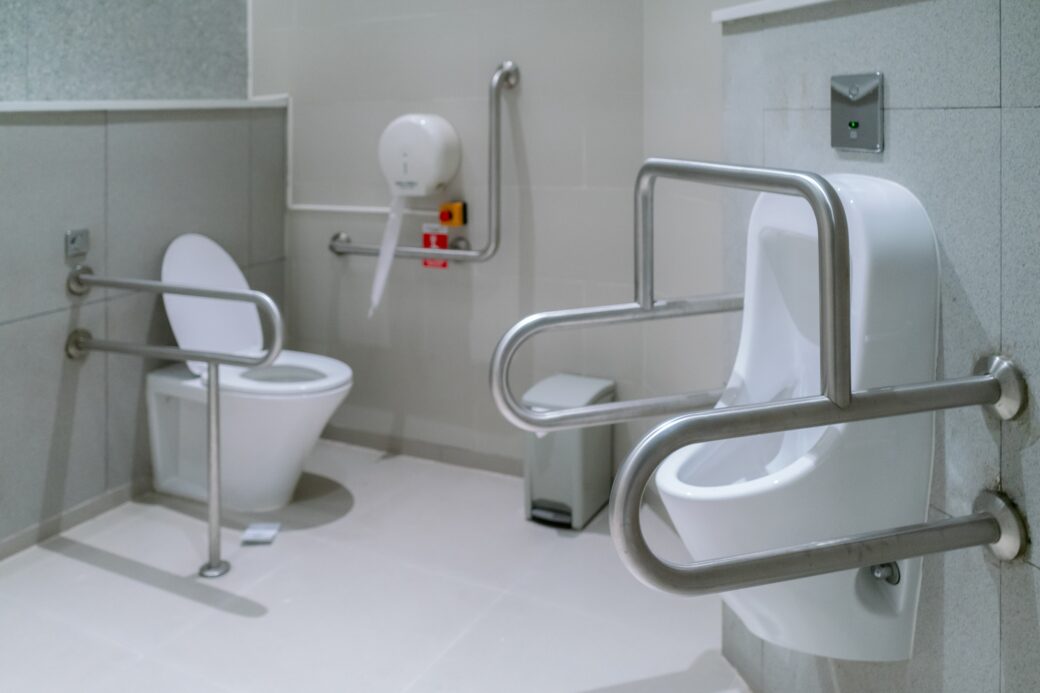
Hospitals use specialized cleaning products and procedures to ensure that bathrooms are thoroughly cleaned, sanitized, and disinfected, minimizing the risk of healthcare-associated infections (HAIs). Hospital bathrooms, which can include patient rooms, common restrooms, and surgical areas, require careful attention to detail to ensure that all surfaces are properly disinfected.
Key Products and Methods Used to Clean Hospital Bathrooms
Hospital-Grade Disinfectants
- What They Are – These disinfectants are specifically designed for healthcare environments and are effective at killing a wide range of pathogens, including bacteria, viruses, fungi, and spores.
- Common Ingredients
- Quaternary Ammonium Compounds (Quats) – Often used in surface disinfectants to kill germs like MRSA, E. coli, norovirus, and influenza.
- Hydrogen Peroxide – Effective against a broad spectrum of pathogens, including C. difficile spores, and is commonly used in hospital-grade cleaners.
- Chlorine Bleach – Used for its strong disinfecting properties, especially in high-risk areas where C. difficile or other difficult-to-remove pathogens may be present.
- Example Products
- Virex® II 256 – A widely used disinfectant in hospitals, effective against MRSA, norovirus, and other healthcare-associated infections.
- Clorox Healthcare® Hydrogen Peroxide Cleaner Disinfectant – A hospital-grade cleaner that’s effective against a wide variety of pathogens, including bloodborne pathogens.
- Sani-Cloth® Prime Wipes – Used for disinfecting high-touch surfaces and commonly used in hospital bathrooms, particularly for sinks, door handles, and light switches.
Disinfectant Toilet Bowl Cleaners
- What They Are – Specialized toilet bowl cleaners designed for use in healthcare facilities to kill germs and bacteria inside the toilet bowl.
- Common Ingredients – Often contain chlorine bleach or quaternary ammonium compounds for effective disinfection.
- How They Work – These cleaners help to disinfect and remove stains from toilet bowls and urinals, targeting bacteria and viruses.
- Example Products
- Lysol® Power Toilet Bowl Cleaner – Contains bleach for disinfecting and cleaning toilet bowls.
- Clorox® Toilet Bowl Cleaner with Bleach – A powerful cleaner for hospital toilets to ensure they remain sanitized and free from germs.
All-Purpose Disinfecting Cleaners
- What They Are – These are multi-surface cleaners that can be used on a wide range of bathroom surfaces, including sinks, countertops, faucets, and tiles.
- How They Work – These cleaners sanitize and remove dirt and grime while disinfecting surfaces to kill harmful pathogens. They are designed to be safe for sensitive surfaces and are often neutral pH to avoid damaging finishes.
- Example Products
- Diversey® Virex® II 256 – An all-purpose cleaner and disinfectant effective for cleaning sinks, faucets, and countertops.
- Ecolab® Peroxide Multi Surface Cleaner and Disinfectant – A hospital-grade cleaner that uses hydrogen peroxide for broad-spectrum disinfection.
Disinfecting Wipes
- What They Are – Disinfecting wipes are commonly used in hospitals for quick clean-ups of high-touch surfaces like toilet flush handles, light switches, door handles, and countertops.
- How They Work – The wipes are pre-saturated with a disinfecting solution that allows staff to clean surfaces without needing to mix solutions or use spray bottles.
- Example Products
- Sani-Cloth® AF3 Germicidal Wipes – These are used for quick disinfection of high-touch surfaces.
- Clorox® Healthcare® Bleach Germicidal Wipes – Contain bleach for disinfection and are highly effective for surfaces that may come into contact with Clostridium difficile.
Enzyme-Based Cleaners
- What They Are – Enzyme-based cleaners are used to break down organic matter, such as urine, feces, and blood, which may accumulate in hospital bathrooms. These are particularly effective for odor control and stain removal.
- How They Work – These cleaners contain enzymes that target and break down proteins in biological matter, helping to remove stains and neutralize odors.
- Example Products
- Zep® Urine Remover – A cleaner that breaks down urine stains and eliminates odors.
- Biozyme® Enzyme Cleaner – Used for removing organic stains and odors, particularly in bathrooms and patient rooms.
Disinfectant Floor Cleaners
- What They Are – Hospital floor cleaners are used to disinfect and clean bathroom floors, which are high-traffic areas in any hospital.
- How They Work – These products help to disinfect the floor while also removing dirt, debris, and organic material like hair and soap scum.
- Example Products
- Diversey® Stride® Citrus Neutral Cleaner – Often used in bathrooms for daily floor cleaning, it is safe for most floor types and neutral in pH.
- Clorox® Healthcare® Hydrogen Peroxide Cleaner Disinfectant – Also used to clean floors, especially for tough stains and odors in high-risk hospital areas.
Steam Cleaners
- What They Are – Steam cleaning is sometimes used in hospital bathrooms to sanitize and disinfect without the need for chemicals.
- How They Work – Steam cleaners use high-temperature steam to kill bacteria, viruses, and fungi by denaturing proteins in the pathogens.
- Advantages
- Chemical-free cleaning.
- Effective for sanitizing surfaces like tile grout, bathtubs, sinks, and toilet bowls.
- Example Products
- Shark Steam Mop – Used in smaller hospital bathrooms or patient rooms.
- Bissell® PowerFresh Steam Mop – Also used for surface sanitizing in hospital settings.
Key Considerations for Cleaning Hospital Bathrooms
- Efficacy Against Healthcare Pathogens – Cleaning products must be hospital-grade and effective against common hospital pathogens such as MRSA, C. difficile, norovirus, and influenza.
- Surface Compatibility – Products must be safe for use on various bathroom surfaces like ceramic tiles, stainless steel, vinyl, and porcelain.
- Non-Toxic and Low-Odor – Since hospital staff and patients are frequently in bathrooms, it’s important to choose products that are non-toxic, low-odor, and environmentally friendly wherever possible.
- High-Contact Areas – Special attention is given to cleaning high-touch areas such as toilet handles, sink faucets, door handles, and light switches, as they are the most likely places for cross-contamination.
Hospitals use a combination of hospital-grade disinfectants, enzyme-based cleaners, neutral cleaners, disinfectant wipes, and steam cleaning to ensure that bathrooms are thoroughly cleaned and sanitized. These cleaners are designed to eliminate bacteria, viruses, and other pathogens, while also being safe for sensitive hospital environments. The goal is to maintain a clean, safe environment for both patients and healthcare staff, reducing the risk of infections.




Leave a Comment