Disinfecting floors in a hospital is a crucial step in maintaining a clean, safe, and sterile environment, especially since hospital floors can harbor harmful pathogens that could lead to infections. The process is more than just mopping; it requires using the right disinfectants, equipment, and techniques to effectively eliminate harmful bacteria, viruses, and fungi.
Here’s a detailed guide on how to disinfect hospital floors…
Step-by-Step Guide to Disinfecting Hospital Floors
Gather Necessary Cleaning Supplies
Before starting, make sure you have the proper cleaning tools and disinfectants
- Hospital-grade disinfectant (such as bleach-based products, quaternary ammonium compounds, or hydrogen peroxide)
- Microfiber mop heads (or disposable mop heads)
- Buckets (preferably with a wringer)
- Floor scrubber (for large or heavily soiled areas)
- Disposable gloves and other personal protective equipment (PPE) (mask, gown, eye protection)
- Clean water (preferably warm)
- Trash bags for waste disposal
- Clean cloths for wiping down high-touch areas (e.g., door handles, light switches)
- Warning signs to alert people of wet floors
Put on PPE (Personal Protective Equipment)
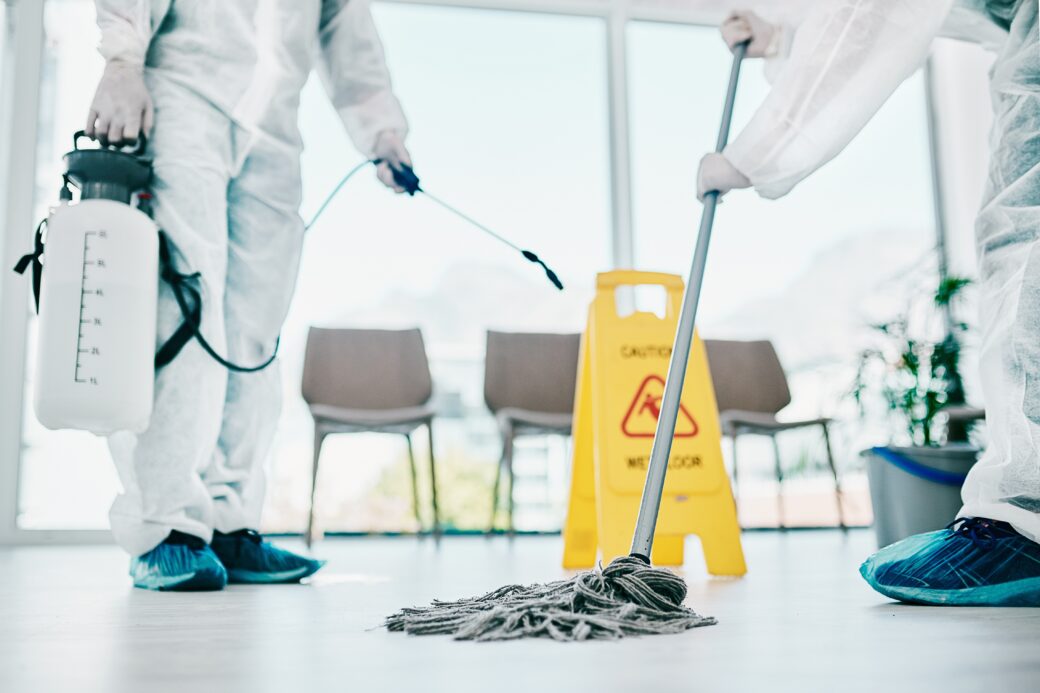
Disinfecting hospital floors involves working with chemicals and potentially hazardous materials, so it’s important to wear disposable gloves and other appropriate PPE (like gowns, goggles, or face shields) to prevent contamination.
Prepare the Disinfecting Solution
- Read the label on your disinfectant for proper dilution and usage instructions.
- Mix the hospital-grade disinfectant with water according to the manufacturer’s guidelines. Some disinfectants may need to be diluted, while others are ready to use.
- Use warm water (not hot) to help dissolve and activate the disinfectant.
- Check contact time on the label to ensure that the disinfectant has enough time to kill pathogens effectively.
Clear the Area
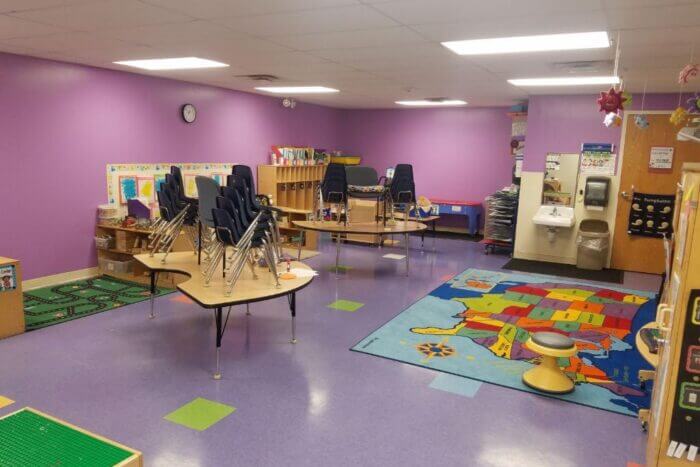
- Remove obstacles – Move furniture, equipment, and other items from the floor, if possible, to ensure that every inch of the surface gets disinfected.
- Sweep or vacuum the floor first to remove loose dirt, dust, and debris. This ensures that the disinfectant can come into direct contact with the surface and isn’t hindered by dirt.
Mop the Floor
- Use a microfiber mop – Microfiber mops are highly effective in hospital environments as they can pick up more dirt and bacteria compared to traditional cotton mops. They also help reduce the spread of contaminants.
- Mop in sections – Start at the farthest corner of the room and work your way toward the exit. This ensures that you don’t walk over freshly disinfected areas.
- Mop a small area and then rinse the mop in the disinfectant solution, wringing out excess liquid before proceeding to the next area.
- Overlap strokes to ensure complete coverage.
- If the floor is particularly dirty or soiled, consider using a floor scrubber for deep cleaning.
Pay Special Attention to High-Touch Areas
High-touch areas such as door handles, bedrails, and medical equipment should be disinfected manually after mopping to prevent cross-contamination. Use disposable cloths or wipes soaked in disinfectant to clean these areas thoroughly.
Allow Disinfectant to Sit (Contact Time)
- Once the disinfectant has been applied, it’s crucial to let it sit for the recommended contact time as specified on the label of your disinfectant.
- Contact time usually ranges from 3 minutes to 10 minutes depending on the disinfectant used. Longer contact time ensures that pathogens are effectively killed.
Dry the Floor
- Air-dry the floor – If possible, leave the floor to air dry after disinfecting to ensure that any remaining germs are killed.
- Use clean, dry towels or mops to help remove excess moisture and speed up drying.
- Place caution signs around the area to indicate wet floors and prevent people from walking on the surface before it has dried.
Dispose of Cleaning Materials Properly
- Dispose of mop water and other waste materials in accordance with your hospital’s infection control protocols.
- Clean the mop heads and store them in a clean, dry place to prevent cross-contamination. If you’re using disposable mop heads, dispose of them properly in a designated trash or biohazard waste bin.
Final Inspection
After cleaning and disinfecting the floor, perform a visual inspection to ensure that the floor is thoroughly disinfected, dry, and free from any contaminants. Ensure that all areas, especially high-touch zones and corners, have been properly cleaned.
Key Considerations for Hospital Floor Disinfection
- Type of Flooring – Different floor types (tile, vinyl, carpet) may require different cleaning techniques or disinfectants. For example, some disinfectants may be too harsh for certain floor materials, so it’s important to check compatibility.
- Pathogen-specific Cleaning – In the case of highly infectious diseases (like C. difficile, norovirus, or COVID-19), specific disinfectants (e.g., bleach-based solutions) and techniques may be required.
- Infection Control Protocols – Always follow your hospital’s infection control guidelines to ensure that the proper products and methods are being used for floor disinfection.
- Frequent Cleaning – In high-traffic hospital areas (like ICUs, emergency rooms, and operating rooms), floor disinfection may need to be done more frequently throughout the day.
Disinfecting floors in a hospital setting involves careful preparation, the right cleaning tools, and proper infection control protocols. By following a thorough cleaning and disinfection process, hospitals can significantly reduce the risk of cross-contamination and protect both patients and staff from harmful pathogens.




Leave a Comment